
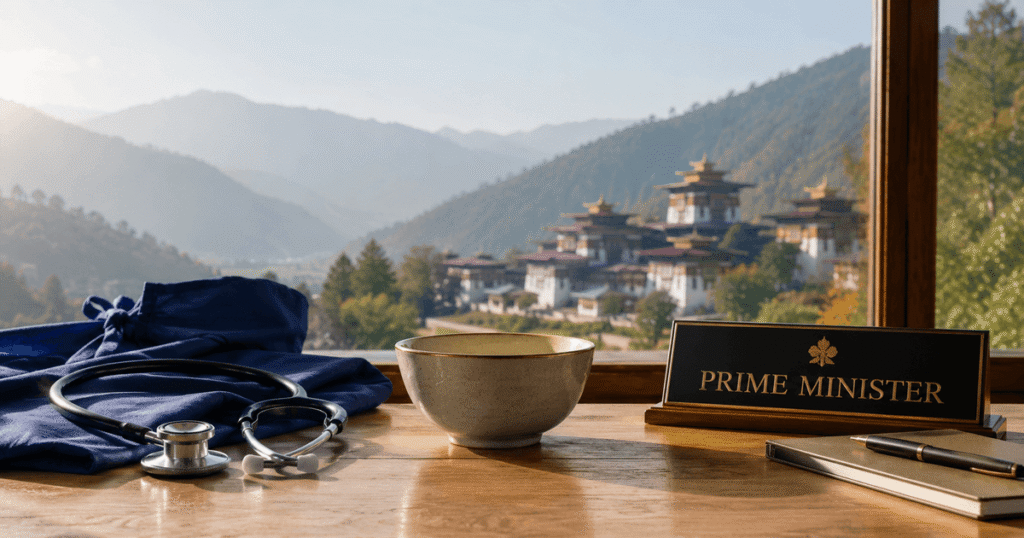
It is an ordinary day at the National Referral Hospital in Thimphu, Bhutan. Dr Lotay Tshering has just finished operating on a patient. Nothing unusual about that, except that during the week Dr Tshering happens to be the Prime Minister of Bhutan.
On weekends, he returns to the hospital and practises medicine. Asked why, his explanation was refreshingly simple. Some people play golf, some practise archery; he likes to operate on his patients.
I find this story fascinating, not simply because a Prime Minister continues to work as a surgeon. There is something about remaining connected to a part of yourself that existed before the title, the office and everything that comes with it. Perhaps it is passion. Perhaps compassion. Perhaps it is simply an activity that continues to give him meaning.
It also raises a larger question. What makes a leader stand apart?
We tend to look for the answer in qualities such as vision, charisma, intelligence or achievement. These undoubtedly matter, but they are also qualities we expect successful leaders to possess. What often makes someone memorable is something less obvious. It is what they choose to do when the role does not require it.
Titles give us authority and positions give us visibility, but neither makes us exceptional. A senior title can tell people what you have achieved. It says much less about what you choose to do with the position once you have it.
For one leader, standing apart may mean staying close to the craft that shaped them. For another, it may be giving time to someone who can offer nothing in return. It may mean developing people who will eventually leave, accepting responsibility when blame could easily be passed elsewhere, or remaining accessible when seniority makes distance both possible and convenient.
These actions are not exceptional simply because they go beyond a job description. What matters is what they reveal about the person behind the position. There is no standard prescription for this, and there should not be. The moment we turn such behaviour into another list of leadership practices; we miss the point.
Perhaps what makes Dr Tshering’s story memorable is precisely that he was not trying to stand apart. He continued doing something that mattered to him even after becoming Prime Minister. The distinction came from the choice, not from an attempt to look distinctive.
That is a more interesting way to think about leadership. We spend considerable time thinking about what our roles require of us. Perhaps occasionally we should also ask what we choose to do when nothing requires us to do it.
What do you do that your title doesn’t require, but says something important about the leader you are?